Security
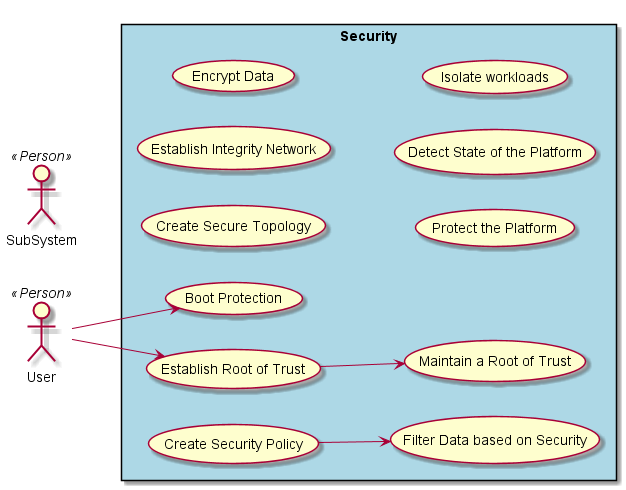
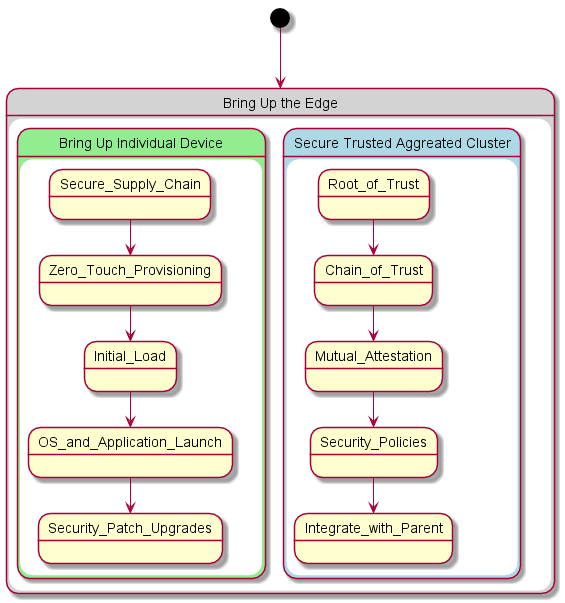
Security is a layer of Edgeville Architecture and consists of Security/Detection, Security/Encryption, Security/Identity Manager, and Security/Trust Manager. The Security layer is responsible for establishing security from the prevention, detection and reaction aspects.
Interface
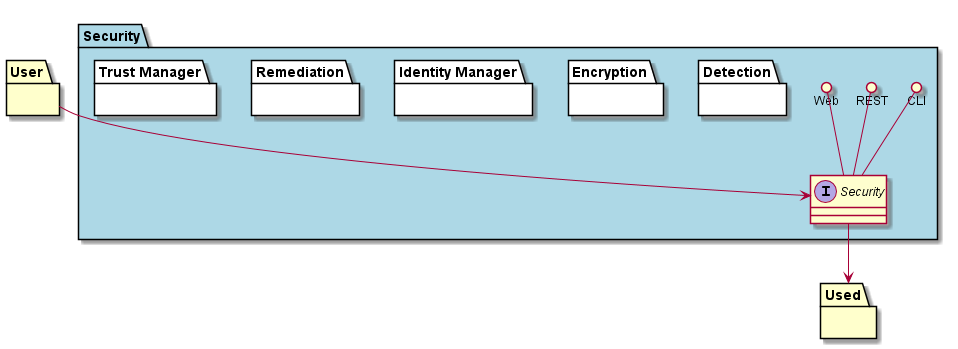
- CLI - Command Line Interface
- REST-API -
- Portal - Web Portal
Deployment Architecture
This subsystem is deployed using micro-services as shown in the diagram below. The ‘micro’ module is used to implement the micro-services in the system. The subsystem also has an CLI, REST and Web Interface exposed through a sailajs application. The sailsjs application will interface with the micro-services and can monitor and drive work-flows through the mesh of micro-services.
Physical Architecture
The Security subsystem is is physically laid out on a multi cloud infrastructure. Each microservice is shown how they connect to each other. All of the micro-services communicate to each other and the main app through a REST interface. A CLI, REST or Web interface for the app is how other subsystems or actors interact. Requests are forwarded to micro-services through the REST interface of each micro-service.